

At Aesthetic Scalp, our team of hair restoration specialists uses the most advanced technology and techniques in the field to help individuals regain their confidence after dealing with genetic hair loss. Double board-certified facial plastic surgeon Dr. Anil Shah and board-certified physician Dr. Sameea Chughtai are pleased to see women and men of all ages to identify the underlying cause of their genetic hair loss in Chicago.
What is Hereditary Hair Loss?
Called androgenic alopecia in medical contexts, genetic hair loss is the most common cause of lost hair in both men and women. While it’s not a specific condition itself, a combination of genetic factors can lead to what is known as hereditary-pattern baldness, which can noticeably affect up to 40% of adults.
Hereditary-pattern hair loss can be especially concerning because, for some people (especially men), the result is usually complete baldness. Thankfully, modern medicine has advanced to the point of offering patients a wide range of effective treatment options that produce natural-looking results.

Identifying the Signs: Male vs. Female Pattern Baldness
Hereditary-pattern hair loss presents differently among men and women. Many men will begin to notice their hair thinning or falling out in their 20s and 30s, while women may not see a change to their hairline until after menopause.
The location of hair loss also varies between men and women. Typically, men with androgenic alopecia may notice hair loss or thinning at the temples and crown, progressing until only the lower strip of hair is left. Meanwhile, hair loss for women tends to spread wider throughout the scalp but is often concealed better than male-pattern baldness.
Unlike men, women suffering from genetic hair loss won’t usually notice a change in their hairline. Women with a complete absence of hair at any location throughout the head may be experiencing a different issue altogether, like alopecia areata.
Am I a Candidate For Treatment?
Aesthetic Scalp in Downtown Chicago offers hair restoration consultations for people dealing with any degree of thinning or loss. Drs. Shah and Chughtai will meet with you in one of our private exam rooms, where you can discuss your concerns and goals freely and confidentially.
We’ll assess your family history, personal medical past, and any medications you’re currently taking. We may also discuss your lifestyle habits, such as your diet and exercise routine. Once this is complete, one of our doctors will thoroughly examine your scalp to evaluate your condition and design a personalized treatment plan that meets your goals and suits your unique situation.
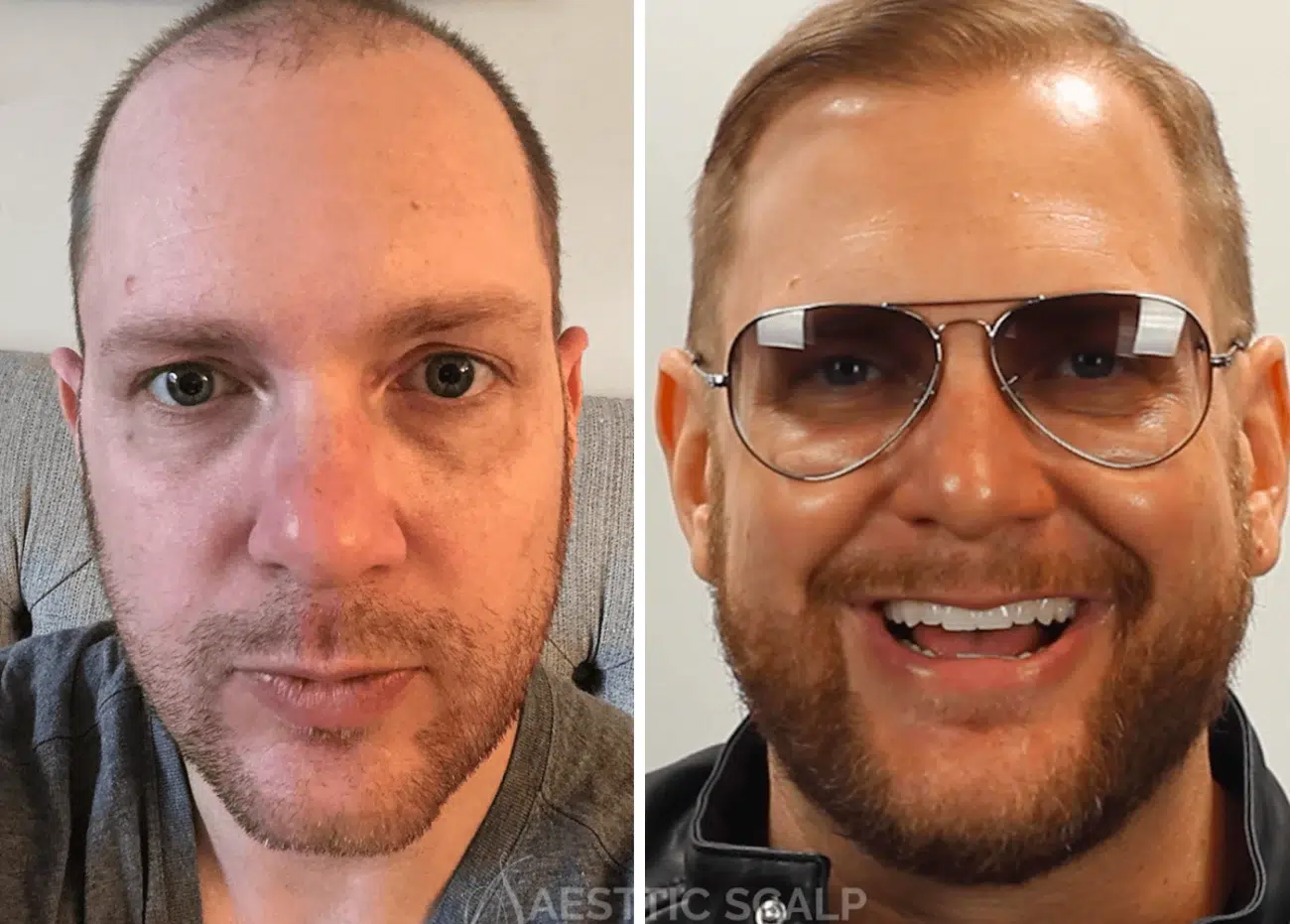
Genetic Hair Loss Before & After Gallery
Methods For Prevention and Treatment
There are several treatment options available to reduce genetic hair loss. Patients whose conditions are diagnosed early may receive preventive care in the form of medication. For example, finasteride is taken orally and is often prescribed exclusively for men. Minoxidil is a topical solution applied to the scalp and can work for both women and men.
Patients whose conditions are too far progressed for preventive measures may instead benefit from a range of other treatments we offer, including:
At our Chicago, IL, office, we typically offer FUE alongside a regenerative treatment (such as PRP) and use the ARTAS® Robotic Hair Transplant system. To craft your personalized treatment plan, you will meet with one of our hair specialists who will assess the state of your scalp and the degree of hair loss. From there, we will go over all of your options with you in detail.
What to Expect After Hair Restoration
Your recovery timeline will depend on which treatment approach we select for your specific needs. Patients who undergo non-invasive procedures such as PRP injections, exosome therapy, or low-level light treatments typically experience minimal downtime. You might notice mild sensitivity at the treatment site for a day or two, but this discomfort is generally quite manageable.
For those who choose surgical interventions like FUE or forehead reduction procedures, plan for a healing period of roughly one to two weeks. During the initial days following surgery, you may observe some swelling or minor discoloration around the treated areas, but these effects will fade.
Benefits of Genetic Hair Loss Treatment
- Restores natural hair density and coverage
- Provides long-lasting, often permanent solutions
- Enhances overall appearance and facial harmony
- Significantly improves self-esteem and social confidence
- Utilizes cutting-edge technology for optimal outcomes
- Offers personalized approaches based on individual needs
- Allows for normal styling and maintenance once healed
Cost of Hair Restoration Therapy in Chicago, IL
The price of a hair restoration treatment plan varies based on several key factors, including the extent of your hair loss, the specific techniques recommended, and the number of appointments needed to achieve your desired results. During your private consultation, we’ll provide a comprehensive cost breakdown.
Genetic Hair Loss FAQ
How can I tell if my hair loss is genetic?
Genetics is a major factor contributing to baldness, but stress, illness, and medications can also cause the condition. To understand if it is genetic, take a look at your family. Do you see a common pattern? The only reliable way to know if your baldness is genetic or caused by something else is to schedule a consultation with Dr. Chughtai or Dr. Shah.
Can genetic hair loss be stopped or reversed?
Unfortunately, genetic hair loss can’t be cured – but you can slow it down. There are many effective treatments to attack the root causes of genetic hair loss that can slow its progression. These treatments are more successful the earlier you catch the condition and address it. Your other option is a surgical baldness procedure, like FUE.
Can I grow hair back on a bald spot?
There are two types of bald spots: those caused by genetics and those resulting from other factors such as stress, illness, or medications. Genetic balding can’t be stopped, only slowed down with techniques like FUE. If your hair loss isn’t genetic, you have more options for addressing the root causes and successfully regrowing your hair, such as PRP and LLLT.
Discover a New Way Forward
Genetic hair loss doesn’t have to define your appearance. At Aesthetic Scalp, we’re committed to helping you explore every available option to restore your look. Contact our practice today to schedule your consultation with Dr. Anil Shah or Dr. Sameea Chughtai about treatments for genetic hair loss in Chicago.
Schedule a
Consultation
Related Procedures
For genetic hair loss, our team offers FUE and robotic transplants, PRP, and exosome therapies that target inherited thinning patterns and strengthen long-term follicle health.
Related Videos
Learn how Dr. Anil Shah and Dr. Sameea Chughtai treat hereditary hair loss using advanced technologies that address both the genetic cause and visible thinning.